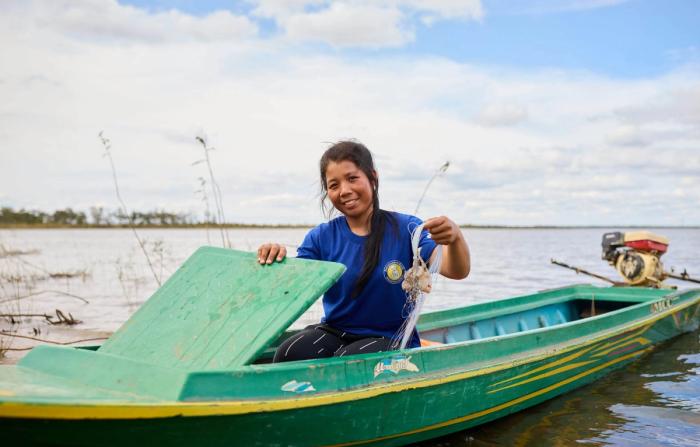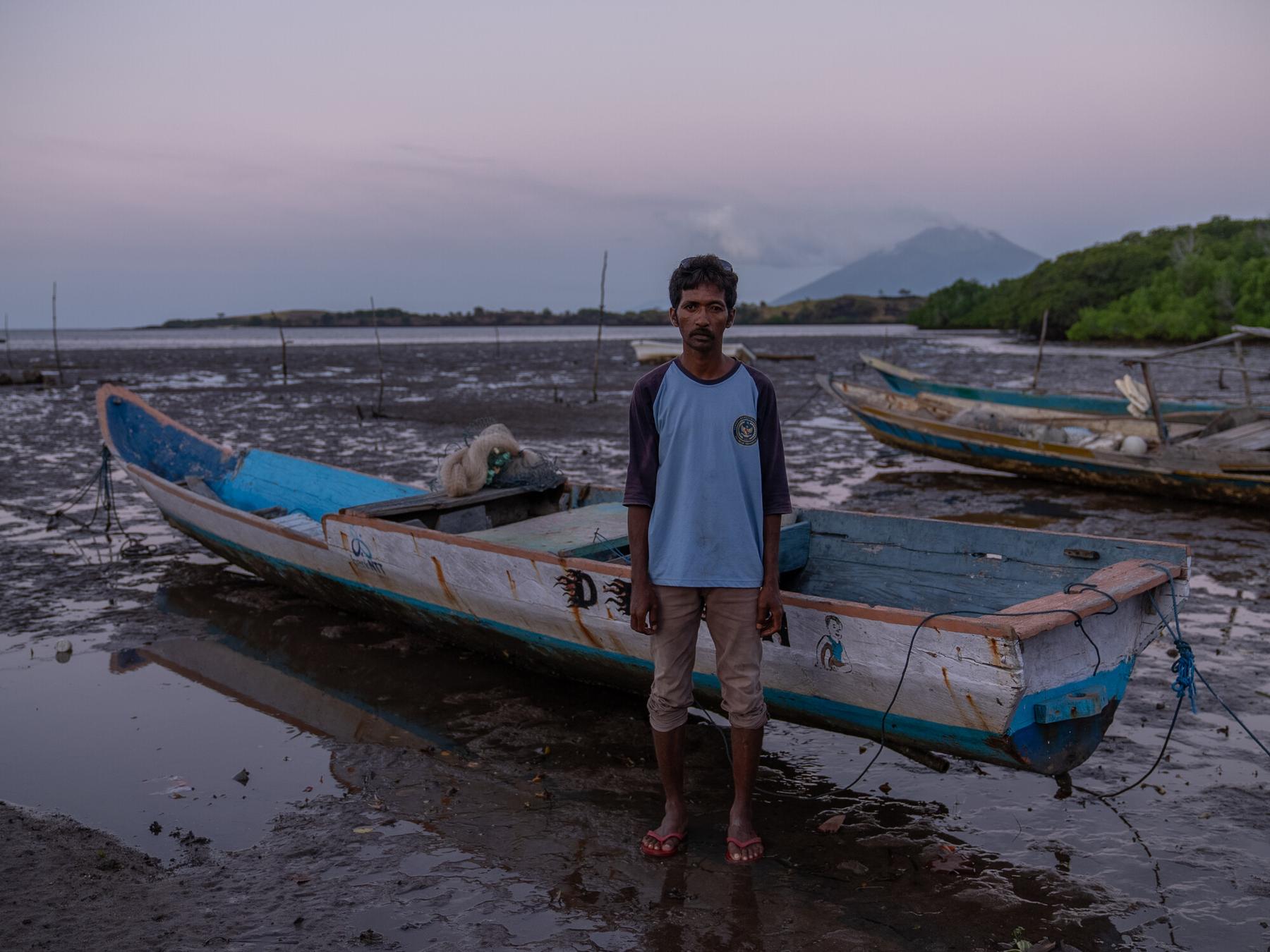
Indonesia: Said (33) in front of his fishing boat. He now struggles to catch enough fish for his family's daily needs, due to climate change and the fish moving further and further out to sea. Photo: Vikram Sombu/Oxfam. Oxfam acknowledges the support of the Australian Government through the Australian NGO Cooperation Program (ANCP).
Climate change
A more equal world is possible. One where any of us facing climate change have the resources to survive extreme weather, and the opportunity to build sustainable futures for generations to come.
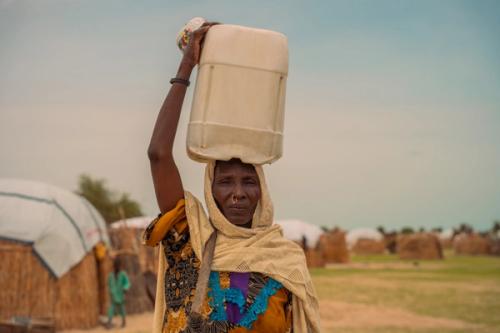
Chad: Yaka Oumarou, is a climate refugee in the Lake Chad province due to frequent flooding. She is on her way to fetch water in the lake. Photo: Adam Kraglaye/Oxfam
our approach
The climate crisis brings enormous injustice. It is affecting us all, but not equally.
In fact, the people who have contributed least to the changing climate are being affected by it the most, and are likely to be less able to protect themselves from the impacts.
Oxfam is seeking climate justice by making sure the people who are most impacted have a strong voice to influence policies and challenge polluters. We are also holding the biggest carbon emitters to account, advocating that they put resources back into communities to help them prepare and respond to climate impacts.
A safe, clean-energy future should be equally attainable for everyone, not a privilege reserved for wealthy nations and individuals. We are making sure people living in poverty benefit from future decisions about renewable energy and the creation of green, sustainable economies.
The disproportionate impact on communities
The climate crisis is disproportionately impacting people who are living in poverty, indigenous communities, women and children.
Despite being the original custodians of their lands, indigenous communities are often denied their fair share of its natural resources and are rarely involved in the decisions and policies that affect their lives and lands. The climate crisis deepens this injustice, and threatens the way of life and survival of indigenous communities around the world.
Women and people of diverse genders are more affected by climate change than men. They are often responsible for collecting water, will eat less than their family in times of scarcity and fare worse than men in times of disaster. Gender inequality means that women are also less likely to have access to knowledge, tools and finance to help them overcome climate challenges.
And of course, one of the greatest threats from climate change is to the health and prospects of our younger generations. They will face more extreme weather events, more limited access to clean water and food, and the risks associated with a rapidly changing environment.
To achieve climate justice, we must address the unequal burden placed on these communities. Everyone deserves a seat at the table when decisions are being made about their future, and Oxfam is making sure the voices of indigenous communities, women and those living in poverty are heard in the halls of power.
Advocating for policy change and accountability
Global emissions are not declining rapidly enough. People living in poverty will continue to see their basic human rights undermined as they lose their lands, livelihoods, health and even their lives to climate change.
We must ensure the global temperature rise stays below 1.5 degrees Celsius so that people can adapt and survive. Our climate justice approach is to make sure that communities have a strong voice to challenge the biggest polluters and demand that those responsible for carbon emissions support them. Part of this work is making sure that climate finance — international funding to support climate action in low-income countries — is available to people who are impacted by climate change.
At a community level, we work with local partners, particularly women’s groups, to develop climate solutions that mitigate climate change, build resilience, protect human rights and transform lives.
Equal access to clean energy and sustainable development
Climate injustice is a huge threat to people living in poverty, but this ledger can begin to be rebalanced with opportunities presented by the transition to clean energy.
A move away from our reliance on fossil fuels and towards renewable energy projects will provide low-income communities with green jobs, more affordable energy and sustainable solutions for housing and transport. Everyone must benefit from these opportunities to seek environmental justice and a transition to a greener future.
how we help
Together with local organisations and governments, we advocate for climate justice across the globe
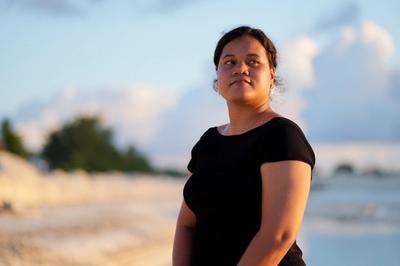
Tuvalu: Grace is a youth activist from Tuvalu. She represents the Rising Nations Initiative and the Make Rich Polluters Pay campaign with Oxfam International. Photo: Aimee Han/Oxfam. Oxfam acknowledges the support of the Australian Government through the Australian NGO Cooperation Program (ANCP)
Building climate resilience
We are working alongside communities to respond to the increasing risk of climate disasters. We align with local partners to help communities address climate risks, shocks and uncertainties.
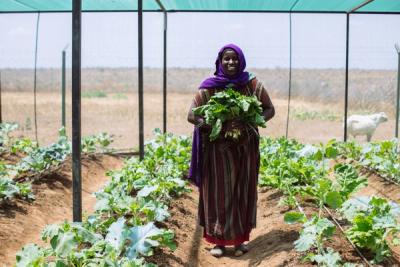
Kenya: Bone Dadach Iya holds up kale from the kitchen garden. The garden is part of the alternative livelihoods and resilience building project for drought-affected communities in Marsabit. Photo: Peter Irungu/Oxfam
Enabling just and fair transitions
We are moving towards an environmentally sustainable economy that is no longer reliant on fossil fuel energy and contributes to decent work for all, social inclusion and the eradication of poverty.
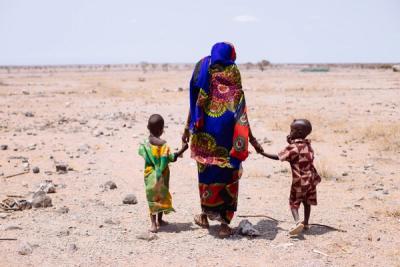
Kenya: Ado Sori walks with her sons in Elbesso, North Horr, Marsabit. Floods swept through the area, damaging homes and rendering roads impassable. She received KES 9000 to help her family recover from the flood impacts. Photo: Peter Irungu/Oxfam
Advocating for access to climate finance
We are strong advocates for the Australian Government and other wealthy nations increasing climate finance, which is international funding to support climate action in low-income countries.
Frequently asked questions
Climate change, sometimes referred to as global warming, is a substantial and continuous change in the global average temperature, driven largely by increased carbon dioxide and other greenhouse gas emissions into the atmosphere. Learn More.
Climate justice relates to the impact of climate change on humans. Because climate change will impact the people who are least responsible for causing it, and who are least likely to be able to recover, we must seek climate justice to help them respond. Climate justice considers the impact of climate change on those who are most vulnerable to its effects — women, young people and indigenous communities — as a human rights issue.
According to the World Bank, global food insecurity is rising, due in large part to our changing climate. Global warming is influencing weather patterns, causing heat waves, heavy rainfall and droughts, which hurts food production and the agricultural sector. Rising food prices in 2021 were a significant factor in pushing around 30 million additional people towards food insecurity.
It’s critical that we take action to restrict the global temperature rise to within 1.5 degrees Celsius. Beyond this point, many countries will face devastation. We must take action at home and on the world stage to combat climate change by making a commitment to reduce Australia’s domestic emissions by 74% below 2005 levels by 2030, reaching net-zero emissions by 2035, and developing a concrete plan to phase out coal and gas from Australia’s energy supply.
We believe all lives are equal and no-one should live in poverty. Climate change is the single biggest threat to our vision of a just and sustainable world. It’s already hurting billions of people – from the drought-impacted communities in sub-Saharan Africa to the fire- and flood-affected regions of Australia.
Oxfam is taking action on climate change through our programs, campaigns and advocacy work. We work with communities and local partners to help people develop local climate solutions that build resilience, protect human rights and transform lives. We are also making sure that those most impacted by the climate crisis have a strong voice to challenge the biggest polluters, and demand that those responsible for carbon emissions do their bit to support affected communities and future generations.
The Intergovernmental Panel on Climate Change (IPCC) is the most authoritative international body on climate science. According to the IPCC’s most recent assessment report, “human- caused climate change is already affecting many weather and climate extremes in every region across the globe. This has led to widespread adverse impacts and related losses and damages to nature and people. Vulnerable communities who have historically contributed the least to current climate change are disproportionately affected.” Read more.
Climate justice aims to redress the imbalance caused by climate change on the poorest and most vulnerable people on earth. It includes actions such as climate finance, where richer and heavy-carbon-emitting nations are accountable for funding climate action in low-income and low-carbon-emitting nations.
The Mary Robinson Foundation, a key organisation in the climate justice movement, developed principles for climate justice, including:
• Respect and protect human rights
• Support the right to development
• Share benefits and burdens equitably
• Ensure that decisions on climate change are participatory, transparent and accountable
• Highlight gender equality and equity
• Use effective partnerships to secure climate justice
How you can help
Demand climate justice today and help support more people to live free from poverty

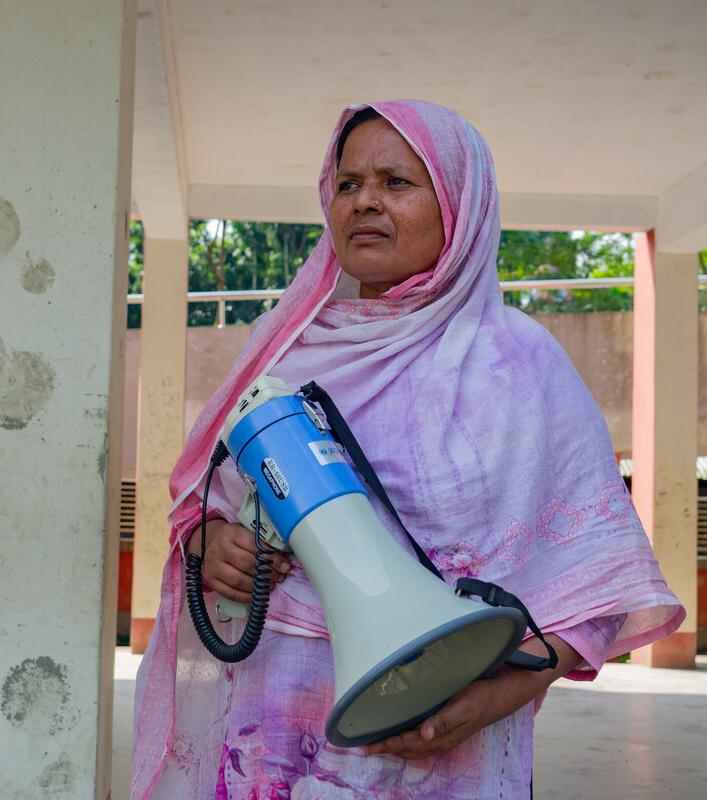
Bangladesh: With help from Oxfam partner JAGO NARI, Dulu Begum has become a community leader and an outspoken advocate for reducing disaster risks. Photo: Elizabeth Stevens/Oxfam.
Bangladesh: With help from Oxfam partner JAGO NARI, Dulu Begum has become a community leader and an outspoken advocate for reducing disaster risks. Photo: Elizabeth Stevens/Oxfam.
Other areas of work
All around the world, women, girls and people of diverse genders and sexualities are more likely than men to face discrimination and violence, and to live in poverty. They are also less likely to have the power to change their circumstances.
Gender inequality is caused by gender bias in our systems, structures and attitudes, which create an environment where women, girls and people of diverse genders and sexualities are denied their rights to learn, earn equal pay, hold leadership positions and live safely. Oxfam is working with communities, local leaders and governments to transform the balance of power between men and people of other genders, and build more equal societies.