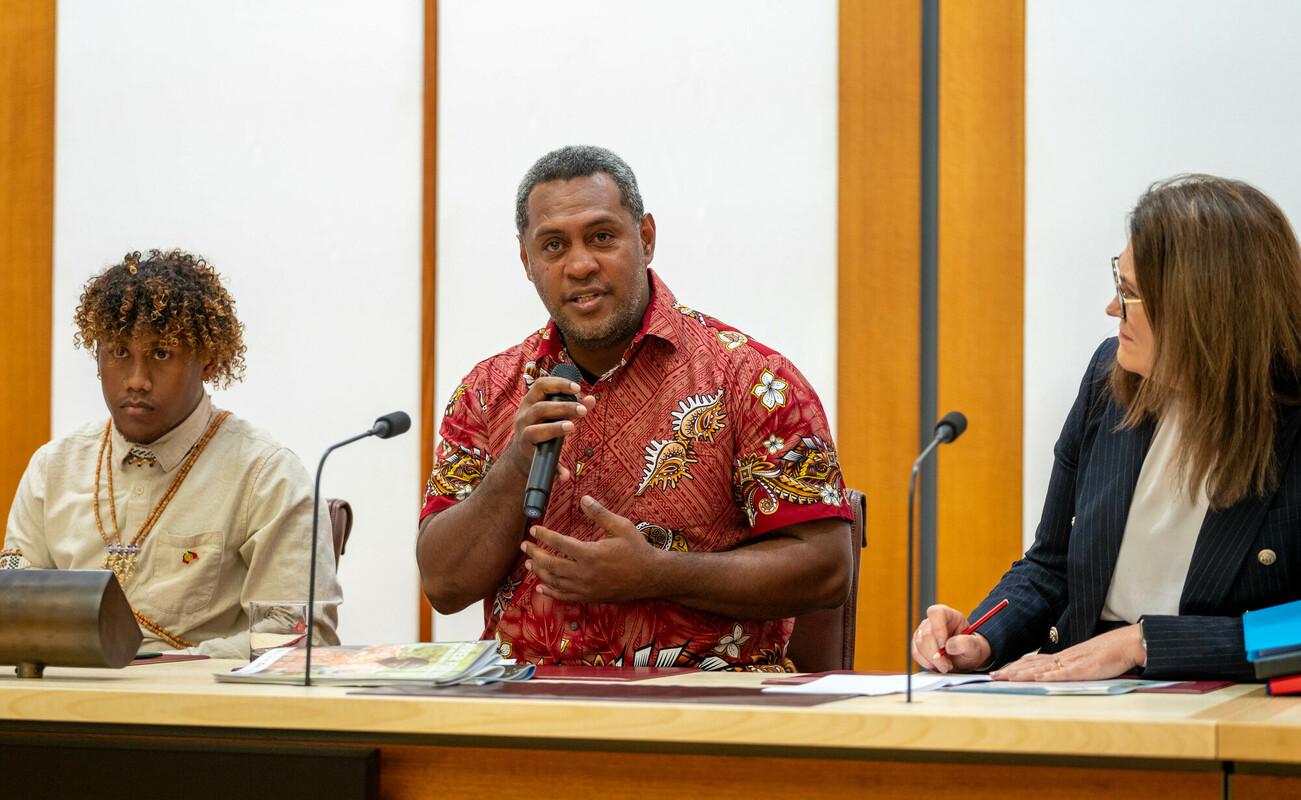
Australia: Usaia Moli speaks in Parliament House, Canberra as part of the Safe Climate, Equal Future Speakers Tour. Photo: Irene Dowdy/Oxfam.
The low-down on law-making
How bills get to Parliament and how they become law
All new laws begin as ‘Bills’. A Bill is simply a proposed law which is brought to Parliament to be debated. Usually, Bills are written and introduced into Parliament by the government. However, an MP or a senator from any party can write a Bill. Bills that are written by an individual MP or senator are called ‘Private Members’ Bills’.
There are a number of stages which a Bill must go through before it can be voted on and become a law. The first stage is called the ‘first reading’. This is when the Bill is introduced to Parliament and its title is read out by a clerk.
The MP or senator who introduced the Bill (if it is a government Bill, this will be a minister) then proposes that the Bill be read a second time. This begins the second reading stage. At this point, consideration of the Bill is usually adjourned for a number of weeks to give MPs and senators the opportunity to go away and have a look at it in detail. When the second reading stage resumes, MPs or senators have the opportunity to express their views on the Bill, and whether or not it should be passed, by making a second reading speech. At the end of the second reading stage, the title of the Bill is read once again by a clerk.
The next stage is called the committee stage and is more informal. It is during this stage that MPs and senators will work through the details of the Bill and debate any amendments to particular provisions. This stage closes with a vote on whether the Bill, as amended, is agreed to.
Finally, there will be a vote on whether the Bill should be read a third time. This is arguably the most important vote as it is essentially a vote on whether the Bill should become a law. Sometimes, there will be further speeches at this stage. The minister responsible for the Bill may provide a closing summary and thank those involved in the debate on the Bill. In the case of controversial Bills, MPs and senators may choose to re-state their opposition to a bill at the third reading stage. If the third reading vote is passed, the title of the Bill is read once again by a clerk and the Bill is officially passed.
However, for a Bill to become a law, it must pass both the House of Representatives and the Senate in the same format. This means that if, for example, the House passes a Bill, which is later amended by the Senate, the amended Bill must be passed in the House once more.
After a Bill has passed through both houses of Parliament, it is referred to as an Act of Parliament. It is then sent to the Governor General, the King's representative in Australia, for their assent. It is now law, and details are published in the Government Gazette.
Learn more about politics
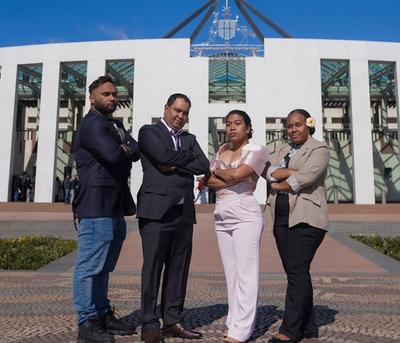
Australia: Four climate activists from the Kimberley, the Philippines and the Solomon Islands came together for the Safe Climate, Equal Future Speakers tour in September 2024. Photo: Heidi Demond/Oxfam
Take political action
There are many ways you can advocate for issues that are important to you.
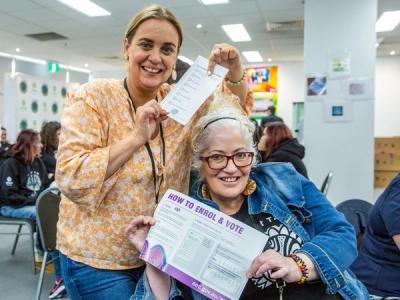
Australia: Leanne Sanders and Nicole Bloomfield vote for well known First Nations people in a mock ballot staged by the Australian Electoral Commission to demonstrate the preferential voting system, just one of the many sessions at the 2022 Straight Talk National Summit. Photo: Jillian Mundy/Oxfam
Voting
Voting is one way to get your voice heard and the most direct way to have an impact in your community.
Australia: Grace was one of four climate activists from the Kimberley, the Philippines and the Solomon Islands who came together for the Safe Climate, Equal Future Speakers tour in September 2024.Photo: Heidi Demond/Oxfam
What happens in Parliament?
Question time, motions, committees, adjournment speeches – everything you ever wanted to know about what happens in parliament.