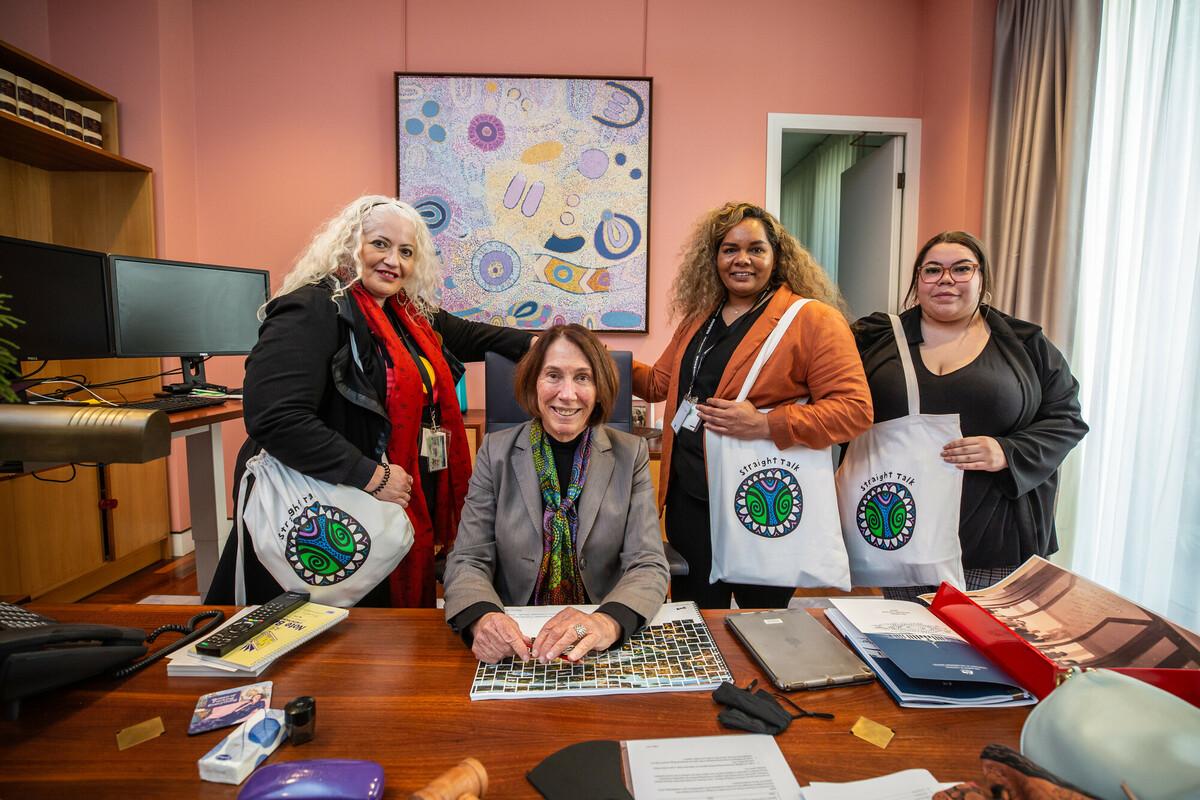
Australia: Straight Talk participants Nicole Bloomfield, Alice Ugle and Shaylem Wilson with President of the Senate Susan Lines (seated) at her desk in Parliament House during the 2022 Straight Talk National Summit. Photo: Jillian Mundy/Oxfam
Meeting your member of parliament
Your personal insights can shape how an MP advocates within their party or government.
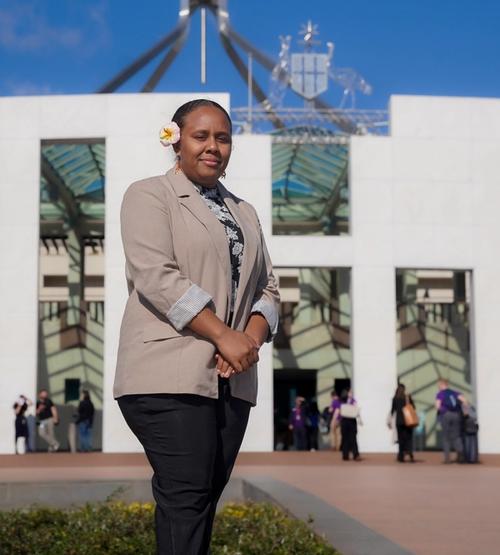
Australia: Tanya was one of four climate activists from the Kimberley, the Philippines and the Solomon Islands who came together for the Safe Climate, Equal Future Speakers tour in September 2024. Photo: Heidi Demond/Oxfam
Passionate politics
How to make the most of your meeting with a member of parliament
Meeting with your local MP allows you to raise issues early, before policies are finalised or votes take place. It's an important opportunity to bring attention to gaps in services or funding.
Given their busy schedule, securing a meeting with your MP could be quite a challenge. How do you convince their personal assistant to put you in the diary?
And once you are in there, what can you do to get the most out of your meeting? Here are some suggestions.
Securing a meeting
Put it in writing
Always request a meeting in writing. If you call first, most MP’s offices will ask that you put your request to them in an email, fax or letter. Your letter doesn’t need to be long, simply outline who you are, and the organisation or issue you represent.
State why you want to meet with them, who will attend the meeting and give them an outline of what you would like to discuss. This should not be a summary of all of your arguments, just one or two sentences or dot points so they have some idea what to expect. Try to get your point across quickly and make the email short and persuasive.
Think about whether there have been any related issues in the media recently. If you can tie your letter into a current issue you will have a better chance of getting a meeting.
Make your request stand out
If you have a compelling reason why your MP should meet you, such as the fact that you live in their electorate or because you are the official spokesperson for an organisation, make this clear. Provide all your contact details and ask the MPs office to get back to you.
To demonstrate your strong interest in meeting with the MP, it is often a good idea to back up your written request with a telephone call. You can simply confirm that the office has received your request and indicate that you are looking forward to hearing back from them.
Be persistent
If you have not received a response to your request within ten days, telephone the office again and ask to speak with the MP’s personal assistant or diary manager. If your request for a meeting is denied, don’t give up.
Many people secure meetings with their MP through sheer persistence. Remember to remain friendly, polite and respectful and you will stand a great chance of eventually securing a meeting time.
Track your communications with your member so that if you have to email and call several times, you can refer to the previous dates that you have communicated with their office. Saying that you’ve tried to contact them three or four times may just get their attention.
Getting ready
Know your MP
State why you want to meet with them, who will attend the meeting and give them an outline of what you would like to discuss.
This should not be a summary of all of your arguments, just one or two sentences or dot points so they have some idea what to expect. Try to get your point across quickly and make the email short and persuasive.
If you don’t already know, make sure you find out which party your MP belongs to, whether they hold any position in that party, how long they have been in parliament and whether they are a member of parliamentary committees.
Try to find out what your MP’s views are on your issue and what the policy of their party is. Do an online search of Hansard, the record of everything that is said in parliament, using your MP’s name and the issue you are meeting them about.
For more information about Hansard and first speeches, take a look at what happens in parliament. Information on all members and senators is available from the Australian Parliament House website. Many MPs have their own websites and some even have their own blog.
Know your issue
Research your issue. Remember, no-one expects you to have an encyclopaedic knowledge of the issue, just make sure you have a good understanding of it and are up-to-date with any media or community campaigns on the issue.
This should not be a summary of all of your arguments, just one or two sentences or dot points so they have some idea what to expect. Try to get your point across quickly and make the email short and persuasive.
It may be helpful to hold a mock meeting with a friend where they play the role of the MP. This will give you a chance to consider some of the questions your MP might raise or arguments they might make, and help you plan what to say in response.
Be confident about what you do know and offer to get back to them on anything you don’t. Saying ‘I don’t know’ is always better than making points you can’t back up. Make sure to follow up with them after the meeting on any questions you weren’t sure how to answer.
Remember, your MP is there to represent you regardless of how much you know about your issue. The most important reason for meeting with your MP is simply that you care about the issue. It’s good to be prepared but you don’t need to be an expert.
Know what you want
It is important to work out before your meeting what action you will ask your MP to take. This will depend on which party the MP belongs to, whether they hold any other positions and what their views are on the issue. It will also depend on the nature of your issue – for example, if you are meeting with your MP about a Bill you disagree with, you might simply ask them to vote against the Bill in parliament.
In other circumstances, it may be useful to identify two or three possible actions that your MP could take. If you're not sure, learn what you can ask your MP.
During the meeting
Team up
If you know other people who care about the issue, organise a small team to attend the meeting. This will give you some moral support and back-up. If you can organise representatives of other groups concerned about the issue, that’s even better. This will help to show your MP that the issue has wider community support.
It can also be effective to bring someone with personal experience of the issue – for example, if you are campaigning for more support for people living with disabilities, it would be ideal for a person living with a disability to share their experiences. Individual experience gives colour to what can otherwise be dry facts. It is also harder for someone to argue against an issue when there is first-hand experience at the table.
While it’s good to take a small team, don’t try to bring too many people. Three or four is ideal. Remember that if you are bringing additional people, you need to let the MPs office know before the meeting.
Plan who will say what and choose someone to lead the conversation with the MP. That person will introduce your group members, begin the discussion and conclude the meeting. One person should also be assigned to take notes of everything that is said during the meeting – especially any commitments that are made.
Be organised
Giving your MP a brief document outlining your key points and pertinent facts and figures can be an effective way to ensure that your message receives further consideration. Your MP may have an adviser or two with them, so you should take additional copies of any documents you plan to refer to.
It may help to write a few notes for yourself, outlining your key arguments and other facts and figures you want to use. Alternatively, you can simply use a copy of the document you have prepared for the MP. However, don’t write out a speech which you then ‘read’ to the MP.
Make a good first impression
Appearance shouldn’t matter, but it does. Get off on the right foot by dressing appropriately and arriving on time. Looking smart and well-groomed gives a better first impression.
Start by introducing yourself and thanking your MP for taking the time to meet with you. Remember to speak clearly and audibly and maintain good eye contact. It’s great to be passionate, but balance this with politeness.
Listen
Your MP might be completely new to the issue you are raising, or they may have been working on it for years. If you are not able to access this information before your meeting, you will need to listen carefully to how your MP responds to what you are saying. You should then tailor your message to your MP’s level of knowledge. Clearly, if they have a good understanding of the issue, you can skip over the basic background information.
In addition to how much they understand about the issue, you also need to know what your MP thinks about it. This will help you to respond to any misconceptions or false information they may have. You can also use knowledge of their views to help make your argument relevant to the way they understand the world.
Listening carefully may also help you to gain valuable insights into the political process.
Your member may disagree with what you’re saying though even once you’ve stated your position and spoken about the issue. That can be frustrating but remember to be respectful! Try to switch tactics or explain your direct experience with the issue and why it is so important.
Tell them exactly what you want
Tell the politician exactly what you want him or her to do. Be brief and to the point.
Give the MP compelling reasons to take the action you are requesting. Try to demonstrate that taking such action is in their best interests. Demonstrating that there is electoral support for your cause is an important first step. The more support you can show, the more likely they’ll think of the issue as a vote-changing issue.
Think of other benefits that you may be able to point to. Is there a chance of local media coverage, or the opportunity to speak at an upcoming rally?
Secure a commitment
Once you’ve spelt out what you are asking for, seek a commitment from your MP. Ask them what they are going to do as a result of your visit and when. Ask them to inform you when they have taken action.
Your MP may try to refer your concern to another MP who has greater responsibility in the area. If this occurs, gently, but firmly, remind your MP that, as a member of their electorate, you would like their involvement.
Even if your MP does not support your position, being asked to justify their differing view is a valuable and fundamental part of the democratic process.
Leave a lasting impact
When the meeting has come to an end – and regardless of how successful it has been – take the time to once again thank your MP for meeting with you.
Ask for the business cards of any advisers present at the meeting. Indicate that you appreciate their time and would be happy to meet with them again at any stage in the future. Get a photo with the MP that you can share on social media and send to the MP in a thank you email/letter later.
After your meeting
Debrief
Talk over how the meeting went with your team. Discuss what worked, what didn’t, and how you could do it better next time. Make a note of any points to keep in mind for your next visit. Your experience and your better understanding of the politician will make the next meeting easier.
Go over your notes of the meeting, paying attention to any commitments that were made by the MP, or any commitment that you may have made to provide further information. Work out who will be responsible for any follow-up actions.
Follow up
Send a follow-up letter or email to the MP. Thank them for meeting with you, outline your understanding of any actions they committed to take and indicate that you look forward to hearing from them. Include any information you promised to send to the politician.
Make sure your MP honours their commitments to you. If you don’t hear anything within a month, give their office a call or write to ask them whether they have taken the action they committed to take. Once again, persistence is the key.
Learn more about politics
Australia: Zedi Vahia Devesi speaks in Parliament House, Canberra as part of the Safe Climate, Equal Future Speakers Tour. Photo: Irene Dowdy/Oxfam
What you can ask your member of parliament
Learn how your local MP can take action on issues that are important to you.
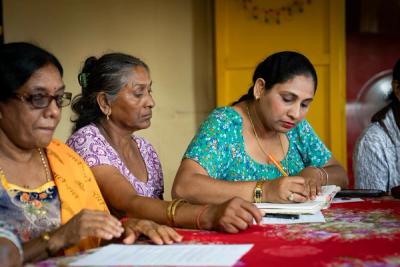
Fiji: Atishma, a member of a women's club in the community of Waituri fills out a form as Jasodra and Raj look on. The women's group is part of a project by the Pacific Centre for Peacebuilding (PCP) called the Women's Peacebuilding Ambassadors Network linking women across Fiji as ambassadors for peacebuilding in their communities. Photo: Alipate Laveti/Oxfam
Writing to your member of parliament
Whether you're advocating for climate action or social equality, contacting your local MP is a powerful, accessible way to push for meaningful progress.
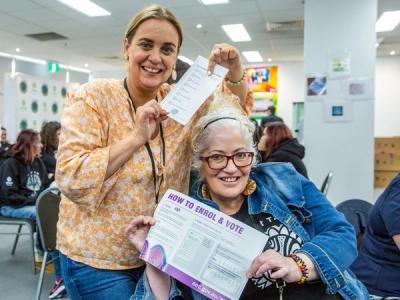
Australia: Leanne Sanders and Nicole Bloomfield vote for well known First Nations people in a mock ballot staged by the Australian Electoral Commission to demonstrate the preferential voting system, just one of the many sessions at the 2022 Straight Talk National Summit. Photo: Jillian Mundy/Oxfam
Voting
Voting is one way to get your voice heard and the most direct way to have an impact in your community.