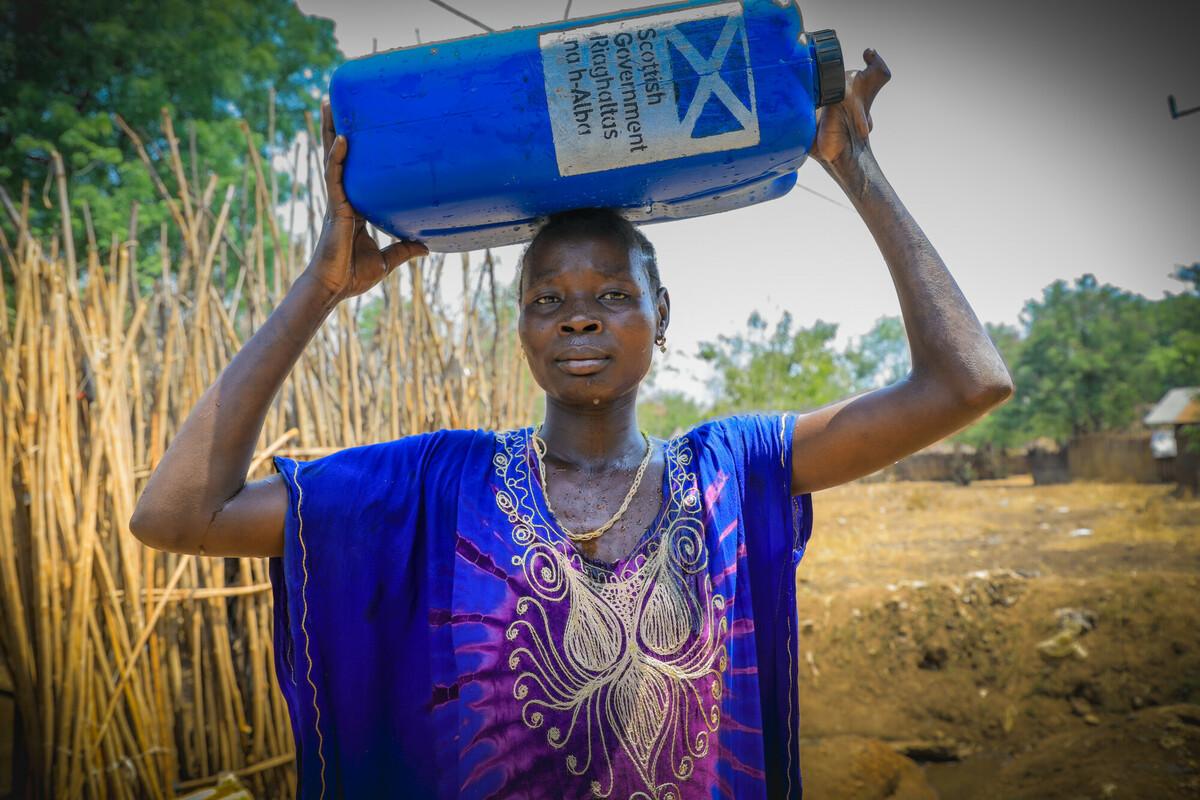
Ethiopia: Adugk, 35, fled the conflict in South Sudan to find refuge in Gambella. With the help of Oxfam, she is able to easily access and collect water. Photo: Liban Hailu/ Oxfam.
Water and sanitation
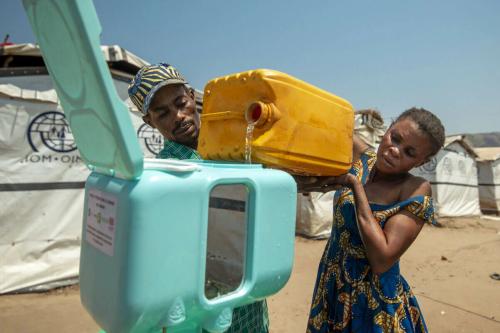
Democratic Republic of Congo. Nombe fills up the hand-washing tank with water. Credit: Arlette Bashizi/Oxfam
It’s all too easy to forget what a miracle water is. With a water supply on tap, food can grow, and people can thrive. Water is life.
Yet access to clean water and safe sanitation — flushing toilets, and other forms of sewage treatment — is one of the biggest health issues around the world. Almost 900 million people in the world do not have access to clean water — or one in eight people (WHO/UNICEF).
Unclean water, poor sanitation and unsafe hygiene practices have claimed more lives over the past century than any other cause. This is continuing in many low-income countries, making this one of the world’s most urgent health issues.
As part of our humanitarian response work, Oxfam is widely recognized as a leading organization helping people meet their needs for clean water, safe sanitation and hygiene advice (collectively known as WASH).
Our water engineers are renowned for their speed and efficiency, providing large-scale water supplies and disease-preventing sanitation facilities to millions of vulnerable people in the world, even in the most challenging environments such as after the 2023 Türkiye-Syria earthquake and the 2022 Pakistan floods.
Working alongside partners on the ground, we are committed to developing innovative, long-term and cost-effective solutions that are tailored to each community’s unique needs and can reduce levels of poverty and disease.
In emergencies, many more lives are put at risk by inadequate water supplies and poor sanitation. It’s estimated that, at the bare minimum, a person needs 15 litres of water per day for drinking, cooking, and washing. This makes providing clean water a massive task requiring the sort of specialist skills and equipment Oxfam has.
The costs of unsafe water
2.2 billion
people do not have access to clean water at home.
2.3 billion
people lack access to basic sanitation services, such as toilets.
Over 80%
of all wastewater worldwide returns to the environment without being treated.
800+
children under the age of five die daily from diarrhea-related illnesses linked to contaminated water.
700 million
people worldwide could be displaced by intense water scarcity by 2030.
Democratic Republic of Congo. Nombe fills up the hand-washing tank with water. Credit: Arlette Bashizi/Oxfam
It’s all too easy to forget what a miracle water is. With a water supply on tap, food can grow, and people can thrive. Water is life.
Yet access to clean water and safe sanitation — flushing toilets, and other forms of sewage treatment — is one of the biggest health issues around the world. Almost 900 million people in the world do not have access to clean water — or one in eight people (WHO/UNICEF).
Unclean water, poor sanitation and unsafe hygiene practices have claimed more lives over the past century than any other cause. This is continuing in many low-income countries, making this one of the world’s most urgent health issues.
As part of our humanitarian response work, Oxfam is widely recognized as a leading organization helping people meet their needs for clean water, safe sanitation and hygiene advice (collectively known as WASH).
Our water engineers are renowned for their speed and efficiency, providing large-scale water supplies and disease-preventing sanitation facilities to millions of vulnerable people in the world, even in the most challenging environments such as after the 2023 Türkiye-Syria earthquake and the 2022 Pakistan floods.
Working alongside partners on the ground, we are committed to developing innovative, long-term and cost-effective solutions that are tailored to each community’s unique needs and can reduce levels of poverty and disease.
In emergencies, many more lives are put at risk by inadequate water supplies and poor sanitation. It’s estimated that, at the bare minimum, a person needs 15 litres of water per day for drinking, cooking, and washing. This makes providing clean water a massive task requiring the sort of specialist skills and equipment Oxfam has.
The costs of unsafe water
2.2 billion
people do not have access to clean water at home.
2.3 billion
people lack access to basic sanitation services, such as toilets.
Over 80%
of all wastewater worldwide returns to the environment without being treated.
800+
children under the age of five die daily from diarrhea-related illnesses linked to contaminated water.
700 million
people worldwide could be displaced by intense water scarcity by 2030.
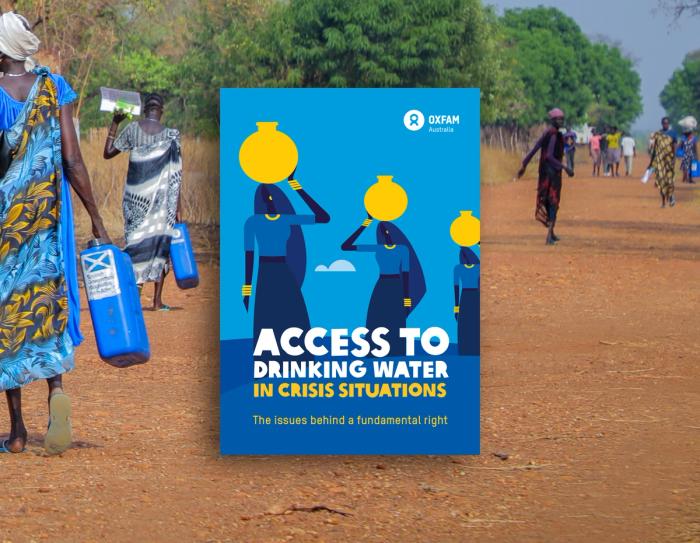
Access to drinking water in crises eBook
Clean water is a fundamental human right. Yet 1 in 8 people on our planet don’t have access to this vital resource. Our eBook dives into why access to clean water is one of the world’s most urgent health issues – as well as its impacts on food security, educational opportunities for women and girls.
Learn more
Timor-Leste: After undertaking training with Oxfam partner, AFFOS, Domingos helps to maintain the local water springs and pond reservoir as part of a Disaster Ready group in his community. The water from this pond is used to irrigate the community's vegetable garden. Photo: Aderito do Rosario da Cunha Mambares/Oxfam. Oxfam acknowledges the support of the Australian Government through the Australian Humanitarian Partnership (AHP).
Disaster risk reduction
Disaster Risk Reduction (DRR) aims to reduce the damage caused by natural hazards like earthquakes, floods, droughts, and cyclones, through prevention.

South Sudan: 35-year-old Nadia Zahad, a refugee from the Sudan war, recounts how she lost her entire family to the conflict. Now displaced in South Sudan, she is focused on rebuilding her life with her son, Ismail. Photo: Herison Philip Osfaldo/Oxfam
Refugees
For the first time in recorded history, more than 100 million people have been forcibly displaced from their homes. These men, women and children are currently living as internally displaced people, asylum seekers or refugees.
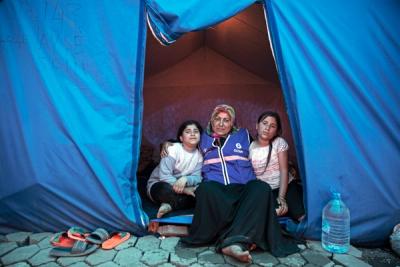
Turkiye: Family which stays in the camp posing for the camera together. Photo: Delizia Flaccavento/Oxfam
Humanitarian Aid
Oxfam Australia has decades of experience responding to emergencies around the world. You can help us respond to emergencies when they happen by becoming a donor.